Cart
0
$0.00


Most of us monitor many things in life—our bank balance, appointments, weight, blood pressure, even the battery level on our phones. Yet we often neglect something that affects almost everything we do: our mood.
Mood monitoring is simply taking a few moments each day to notice and record how we are feeling. It is not about judging our emotions as "good" or "bad." It is about becoming more aware of them.
When we track our moods consistently, patterns begin to emerge. We might notice that our anxiety rises when we are sleep-deprived, our mood drops after certain interactions, or we feel calmer after exercise, prayer, meaningful conversations, or adequate rest.
Over time, mood monitoring helps us:
I once worked with a person who described feeling anxious "all the time." That was how it felt, but after monitoring the mood several times a day, a different picture emerged.
The anxiety wasn't constant.
Certain times were relatively calm, while anxiety consistently increased around particular situations and interactions. Once the pattern became visible, we had something specific to work with.
That is one of the greatest benefits of monitoring: what feels random often has a pattern.
We don't have to become obsessed with every emotional fluctuation. A simple AM, PM, and night check-in is often enough.
Ask yourself:
How am I feeling right now? What happened before I felt this way? What helped me feel better—or worse?
You cannot manage what you never notice.
Monitoring our mood is not about controlling every emotion. It is about understanding ourselves better so we can respond to life more wisely.
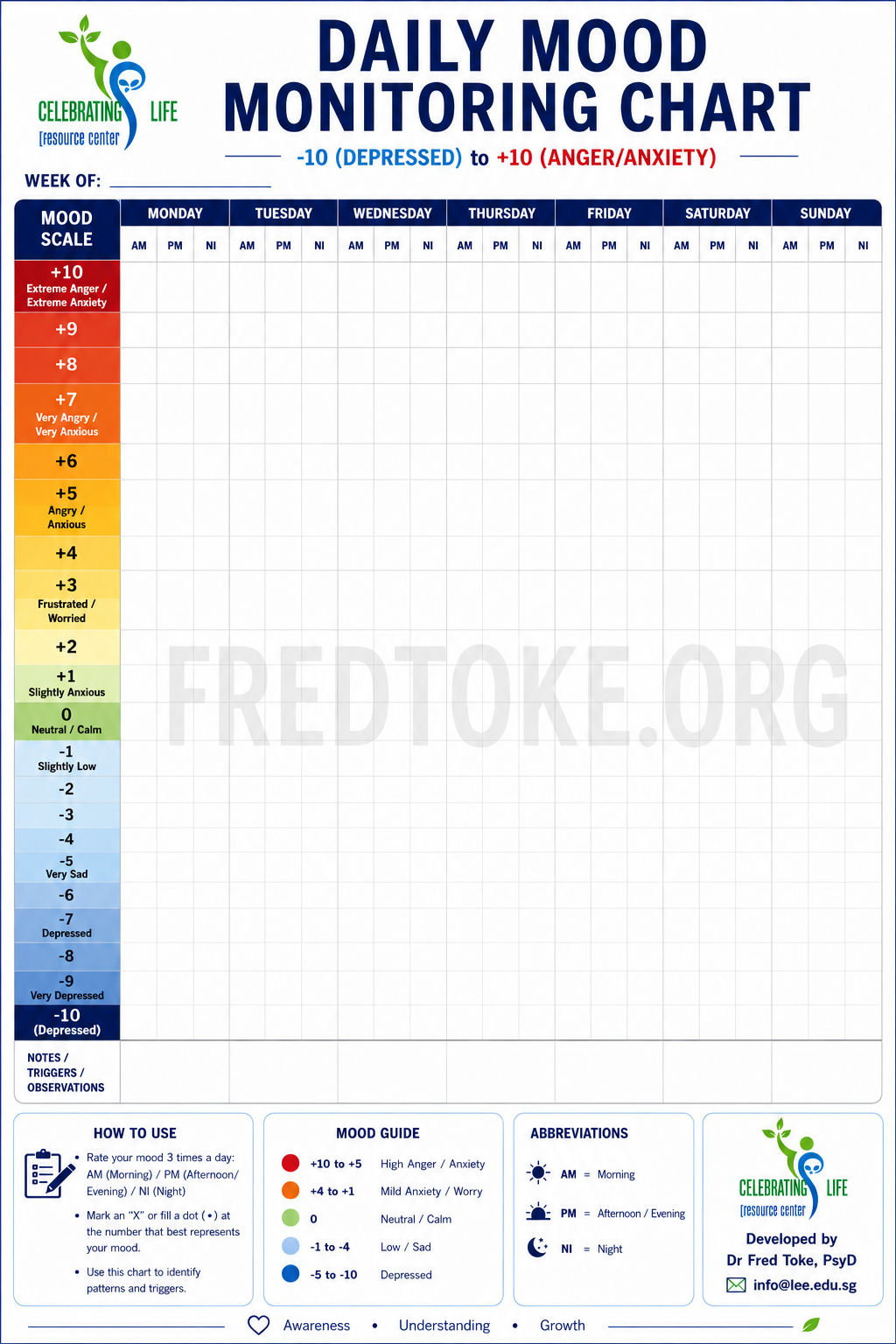
The Daily Mood Monitoring Chart is designed to help you become more aware of your emotional patterns throughout the week. It is not about judging whether an emotion is "good" or "bad." It is about noticing what you feel, when you feel it, and what might be influencing it.
Rate your mood three times a day: AM (morning), PM (afternoon/evening), and NI (night). At each check-in, pause for a moment and ask, "How am I feeling right now?" Then mark an X or dot on the number that best represents your current emotional state.
The scale runs from -10 to +10. 0 represents feeling neutral or calm. Moving below zero reflects increasing levels of low mood or sadness, with -10 representing a severely depressed mood. Moving above zero reflects increasing agitation, worry, anxiety, or anger, with +10 representing extreme anger/anxiety. The scale reflects intensity at that moment, not a diagnosis.
Use the Notes / Triggers / Observations section to briefly record anything that might have influenced a significant change: poor sleep, work pressure, conflict, loneliness, encouraging news, exercise, meaningful conversations, prayer, rest, or other events.
At the end of each week, look back at the chart rather than focusing on one isolated score. Ask: When was my mood at its best or worst? What happened beforehand? Are there recurring triggers? What seems to help me recover?
The goal is simple:
NOTICE → IDENTIFY → UNDERSTAND → RESPOND
We manage our emotions better when we learn to notice them before they manage us.