Cart
0
$0.00

THE POWER OF A GRATITUDE JOURNAL
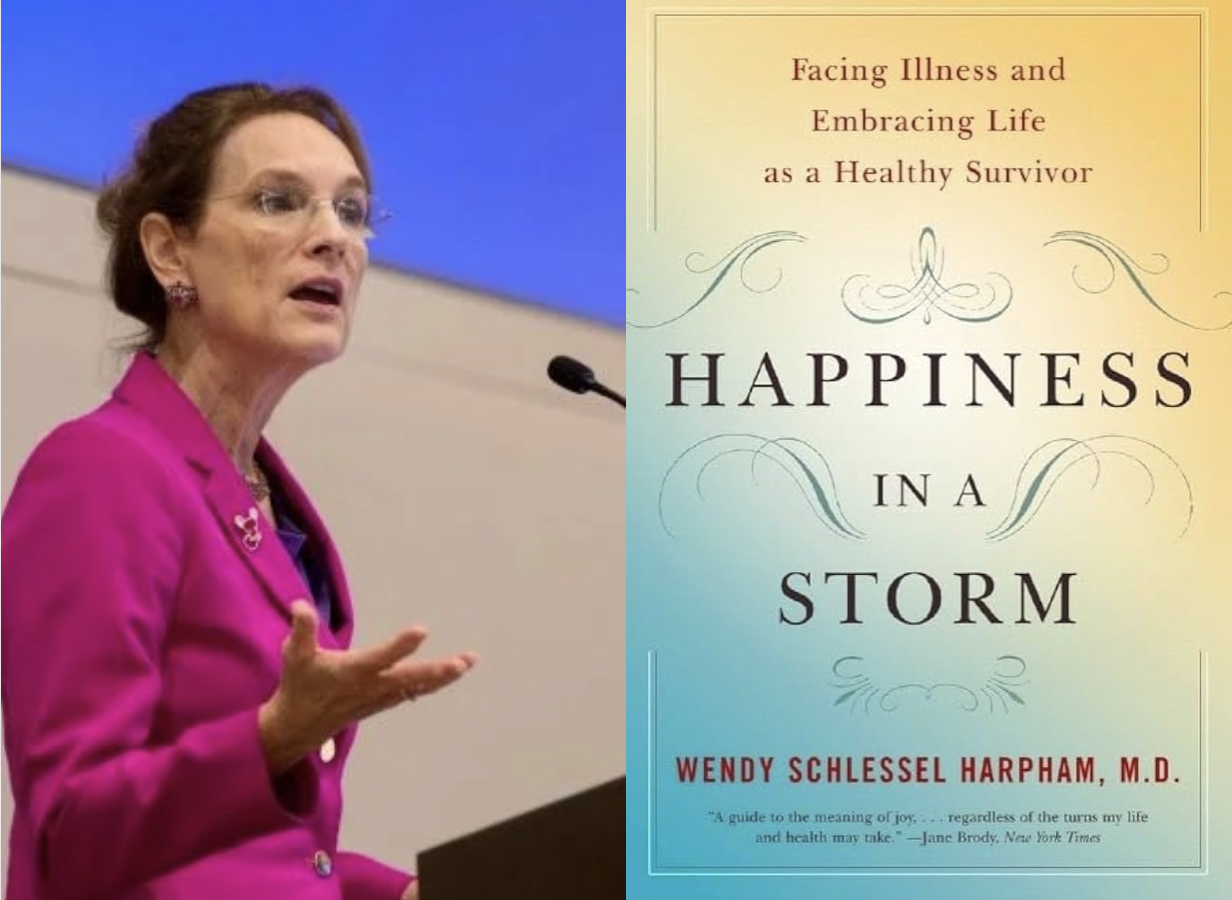
Dr. Wendy Schlessel Harpham was a physician, wife, and mother of three young children when she was diagnosed with non-Hodgkin's lymphoma.
What followed was a long journey. Over the next 15 years, she went through repeated treatments and eight relapses.
In her book Happiness in a Storm, Dr. Harpham writes about learning to pursue happiness and hope even while living with serious illness. One of the simple disciplines she practiced was keeping a daily gratitude journal.
Eventually, she experienced a long remission.
But Dr. Harpham was careful not to claim that positive thinking or gratitude cured her cancer. Instead, she said that cultivating positive emotions helped her live better and made the difficult days easier.
I love that distinction.
Gratitude doesn't necessarily change what is happening around us. It changes what we notice while we are going through it.
Our brains naturally notice threats, problems, disappointments, and what is missing. A gratitude journal intentionally trains our attention toward what is also present: kindness, provision, relationships, progress, beauty, hope, and God's faithfulness.
That is why I encourage a simple daily practice:
AM — What am I grateful for as I begin my day?
PM — What happened today that I appreciate?
NI — What am I thankful for as I end my day?
Nothing profound is required. A conversation. A meal. Someone's kindness. An answered prayer. A beautiful sky. A good cup of coffee.
Scripture puts it beautifully: "Give thanks in all circumstances." — 1 Thessalonians 5:18
Notice: in all circumstances, not necessarily for all circumstances.
A gratitude journal isn't about pretending everything is good.
It is about discovering that even when everything isn't good, there is still good to be found.
Three moments. Three things. Every day.
Perhaps we don't need more things to be grateful.
Perhaps we need to become better at noticing them.
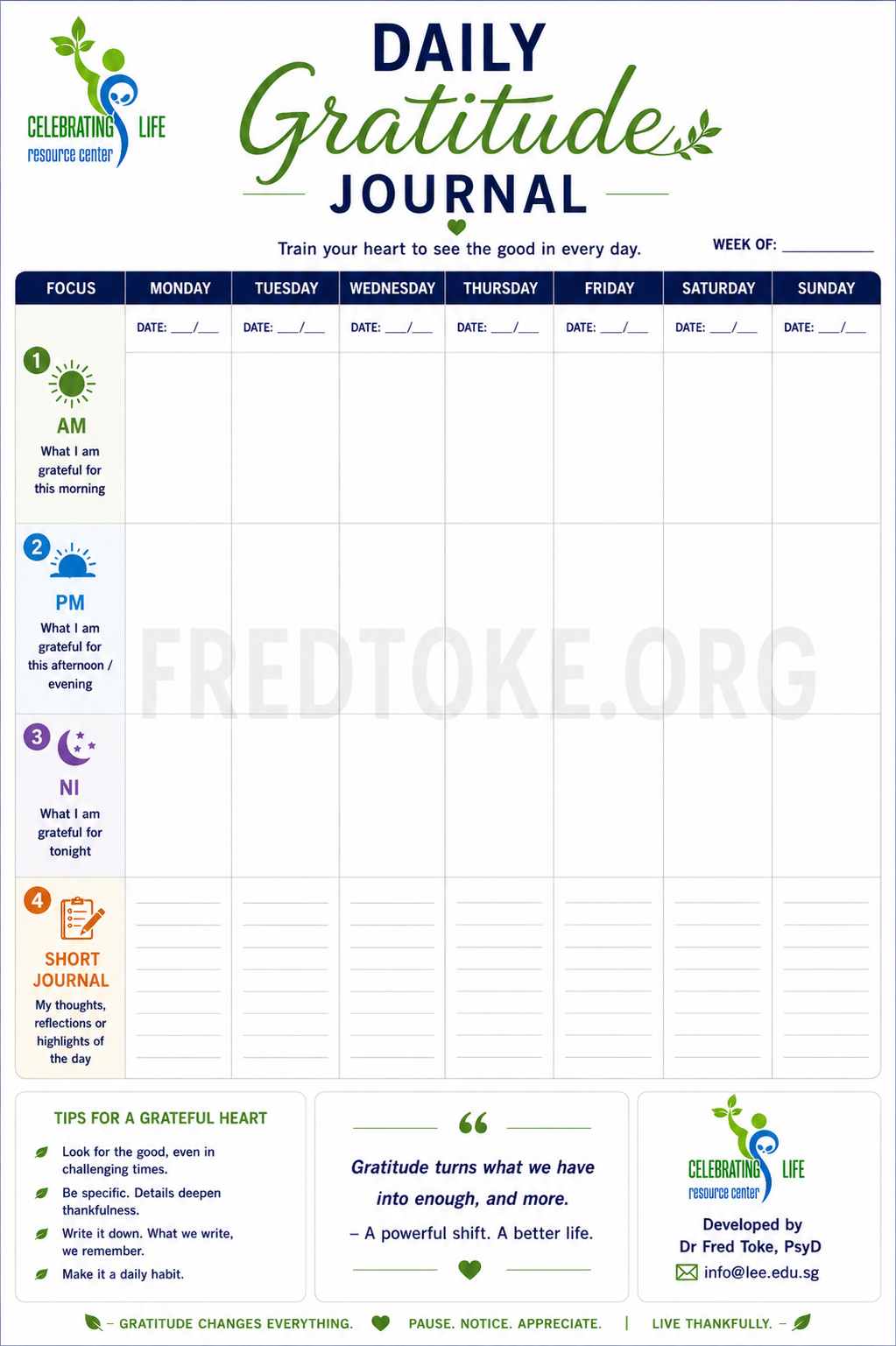
How to use it: Pause three times during the day. In the AM, identify something you are grateful for as you begin your day. In the PM, notice something good that has happened or something you appreciate. At NI, identify something from the day for which you are thankful.
These don't have to be major events. A good meal, an encouraging message, completing a task, a quiet moment, someone's kindness, or simply getting through a difficult day all count.
At the end of the day, use the Short Journal section to capture a few thoughts, feelings, highlights, or meaningful moments.
Try to be specific rather than repetitive. Instead of repeatedly writing "my family," write what happened: "I appreciated the unexpected phone call from my daughter today."
Gratitude does not deny difficulties. It reminds us that difficulty is rarely the whole story.